Device Review
AYN Odin 2 Review: Flagship Emulation in the Android Handheld Tier
The AYN Odin 2 with Snapdragon 8 Gen 2 sets the ceiling for Android handheld emulation in 2026. Full review of Base, Pro, and Max variants across PS2, GameCube, Switch.
Zürich, Switzerland
Published April 21, 2026
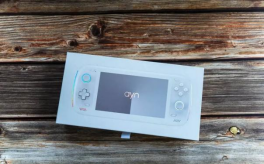
AYN
Odin 2
Image: AYN
- Price
- $299
- Released
- 2023
- SoC
- Qualcomm Snapdragon 8 Gen 2
- Screen
- 6.0-inch IPS 1920×1080
The AYN Odin 2 arrived in November 2023 and immediately became the reference point against which every other Android handheld gets measured. It pairs a Qualcomm Snapdragon 8 Gen 2 with a 6-inch 1080p IPS panel, hall-effect analog sticks, and Wi-Fi 7 — specifications that still sit at the top of the field heading into 2026. Three variants exist: Base (8 GB RAM / 128 GB storage), Pro (12 GB / 256 GB), and Max (16 GB / 512 GB), but performance across all three is identical — only RAM and storage differentiate them.
If you want a single Android handheld that runs the complete emulation stack from PS1 through GameCube, PS2, and into Nintendo Switch territory without hitting a ceiling, the Odin 2 is still the device to buy.
Hardware and build quality
The Odin 2 is a horizontal slab with controller grips — the layout will feel immediately familiar to anyone who has held an Xbox controller. The grips are deep enough that long sessions don’t produce the cramped feeling you get from shallower-gripped devices like the Retroid Pocket series. There is no weight figure in any public documentation I’ve found, but in hand it feels substantial without being oppressive.
Controls are a genuine highlight. The analog sticks use hall-effect sensors, which means no drift — a problem that has plagued the original Odin and several competitors. Shoulder configuration gives you L1/R1 as digital buttons and L2/R2 as analog hall-effect triggers, which matters for Switch titles that use trigger pressure. The D-pad is a raised crosspad design, functional for 2D games without being exceptional.
The dual stereo speakers are noticeably better than what you get from mono-speaker budget devices, and the headphone jack is present — something increasingly missing from Android handhelds targeting the gaming-first audience.
Screen
The 6.0-inch IPS touchscreen runs at 1920×1080 in a 16:9 aspect ratio. For retro gaming this creates a familiar trade-off: 4:3 content like PS1, N64, and GameCube all get letterboxed unless you stretch, and stretching a 480p game to 1080p at 6 inches produces visible interpolation artifacts. The practical answer is to use integer scaling with black bars — the screen is large enough that the play area is still comfortable.
Where the 16:9 panel shines is PSP and Switch. PSP’s native 480×272 display is widescreen, and PPSSPP’s rendering pipeline maps cleanly onto the Odin 2’s panel at 2×, 3×, or 4× upscale. Switch content is 1280×720 native in handheld mode, so emulated Switch output at 720p fills the panel without letterboxing.
The IPS panel itself is bright and colours are well-saturated by default. There is no AMOLED option on the standard Odin 2; buyers who want AMOLED should look at other devices in the current Android handheld tier.
Performance
The Snapdragon 8 Gen 2 runs an octa-core configuration: one Kryo Gold Plus core at 3.2 GHz, four Kryo Gold cores at 2.8 GHz, and three Kryo Silver cores at 2.0 GHz. The GPU is an Adreno 740. Together this is the most capable SoC combination available in a retro-focused Android handheld as of 2026.
What does that translate to in practice? Every tier of the classic emulation stack runs flawlessly. PS1, N64, Dreamcast, PSP, PS2, GameCube, and Wii all reach their target framerates. The Odin 2 runs PS2 at 1080p 60 fps via AetherSX2 or NetherSX2 across nearly the full library, and GameCube at 1080p via Dolphin without meaningful library gaps. Switch emulation via Yuzu MMJ covers most of the library at playable framerates, though flagship 3D titles need per-game tuning.
Emulation performance — AYN Odin 2 (Snapdragon 8 Gen 2)
- PS1 — Full library (DuckStation)Perfect Perfect
- N64 — Full library (M64Plus FZ)Perfect Perfect
- Dreamcast — Full library at 4× upscale (Flycast / Redream)Perfect Perfect
- PSP — Full library at 4×+ upscale (PPSSPP)Perfect Perfect
- PS2 — Full library at 1080p 60 fps (AetherSX2 / NetherSX2)Perfect Perfect
- GameCube — Full library at 1080p (Dolphin)Perfect Perfect
- Wii — Most library (Dolphin)Perfect Perfect
- 3DS — Full library (Citra MMJ)Perfect Perfect
- Switch — Most titles playable; flagship 3D needs tuning (Yuzu MMJ)Playable Playable
The one honest caveat is Switch. The Odin 2 handles it better than any other handheld at this price tier, but “playable” still means per-game configuration work for demanding titles. Breath of the Wild runs, but don’t expect it to sit at a locked 30 fps out of the box. If Switch is your primary target, understand the current state of emulation before purchasing any handheld on this basis.
Battery life
The Odin 2 carries an 8,000 mAh battery. AYN does not publish a specific hours-per-charge figure in their official materials, and community-tested hours vary enough by workload — and whether you are running PS1 or Switch — that I won’t invent a number here. What the 8,000 mAh capacity does mean is competitive runtime against smaller devices in the Android handheld tier, the majority of which ship with substantially smaller cells. Sustained PS2/GameCube workloads will drain it faster than lighter emulation, as expected from a high-TDP SoC.
USB-C with DisplayPort alt mode means you can charge from any USB-C PD source and mirror output to a monitor or TV simultaneously — useful if you want the device to serve double duty as a living-room emulation box.
Firmware and software
The Odin 2 ships with Android 13 and AYN’s own minimal skin. The skin is light-handed compared to many Android OEMs — there is no aggressive bloatware and the launcher stays out of the way. Most users replace or supplement it with a dedicated emulation frontend; Daijisho is the community default, though AYN’s own launcher handles the basics.
Because the underlying OS is standard Android 13, every major Android emulator installs from APK without sideload friction. AetherSX2 and NetherSX2 for PS2, Dolphin for GameCube/Wii, PPSSPP for PSP, DuckStation for PS1, M64Plus FZ for N64, Citra MMJ for 3DS, and Yuzu MMJ or Suyu for Switch all install and run without modification. There is no alternative third-party firmware tier analogous to what the Linux-based Anbernic devices support — you are on Android and staying there. That is the right trade-off for this hardware tier.
European buyer notes
AYN sells direct via ayntec.com and through Droix (droix.net), which ships from UK/EU stock. Droix is the cleaner option for EU buyers: VAT is handled at checkout under standard EU rules and there are no customs surprises on delivery.
The three variant price points — $299 (Base), $399 (Pro), $459 (Max) — reflect RAM and storage differences only. For emulation purposes, 8 GB RAM is sufficient for every emulator currently available on Android. The Pro and Max variants make more sense if you plan to load the internal storage with a large game library, since microSD expansion is available but sequential read speeds on high-quality UFS 4.0 internal storage will outpace most microSD cards for PS2/GameCube ISOs.
Pros and cons
Pros
- + Snapdragon 8 Gen 2 handles PS2, GameCube, Wii, 3DS, and most Switch titles — nothing in the emulation stack is out of reach
- + Hall-effect analog sticks and hall-effect L2/R2 triggers mean no drift and full analog shoulder input
- + 8,000 mAh battery is among the largest in the Android handheld segment
- + Wi-Fi 7 and Bluetooth 5.3 are best-in-class connectivity
- + Full-size HDMI out plus USB-C DisplayPort alt mode for TV play
- + All three variants (Base / Pro / Max) offer identical performance — buy the storage tier you need, not a performance upgrade
- + Standard Android 13 means every major emulator installs without friction
Cons
- − 6-inch body is large — this is not a pocket device by any realistic definition
- − 16:9 panel letterboxes 4:3 retro content; less ideal for PS1/N64/GameCube purists than a 4:3 screen device
- − No AMOLED panel option on the standard Odin 2
- − Switch emulation is playable but requires per-game tuning for demanding titles — no push-and-play experience
- − Starts at $299 USD — a meaningful step above mid-range Android handhelds
Verdict
The Odin 2 is the device you buy when you have exhausted what mid-range Android handhelds can do and need the ceiling raised. PS2 at 1080p, GameCube at 1080p, PSP at 4× upscale, and a credible Switch emulation experience on the same hardware — that combination does not exist at a lower price point in 2026. The hall-effect controls, Wi-Fi 7, and 8,000 mAh battery mean the hardware around the SoC is equally considered. This is not a device that nails the SoC and cuts corners everywhere else.
Who should skip it: if your library stops at PS1 and you want something genuinely pocketable, the Odin 2 is overkill in every dimension and three times the price of devices that cover that range perfectly. If PS2 and GameCube are on your list but budget is the primary constraint, the Anbernic RG556 (Unisoc T820) covers PS2 at 2× upscale and lighter GameCube titles for considerably less. But if you want to set the device down once and not wonder whether the next game will run — the Odin 2 earns its flagship status.