Comparison
Retroid Pocket 4 Pro vs Pocket 5: Is the Upgrade Worth It?
Retroid Pocket 5's Snapdragon 865 + AMOLED versus Pocket 4 Pro's Dimensity 1100 — what's the real difference at the $219 vs $149 tier?
Zürich, Switzerland
Published April 24, 2026
Both devices share the same chassis philosophy, the same Android 13 base, and the same manufacturer. The real question is whether the Retroid Pocket 5’s Snapdragon 865 and AMOLED screen justify paying $70 more than the Pocket 4 Pro’s $149 direct price. For most buyers in the €150–€220 range, this is the comparison that actually matters — not Retroid vs. a competitor, but Retroid vs. itself one generation up.
The short answer: the Pocket 5 is the better device, but the Pocket 4 Pro is not embarrassed by the comparison. The gap shows most clearly in GameCube, PS2 upscaling, and screen quality. If those matter to you, spend the extra money. If your ceiling is PSP and PS2 at modest settings, the RP4 Pro holds up fine.
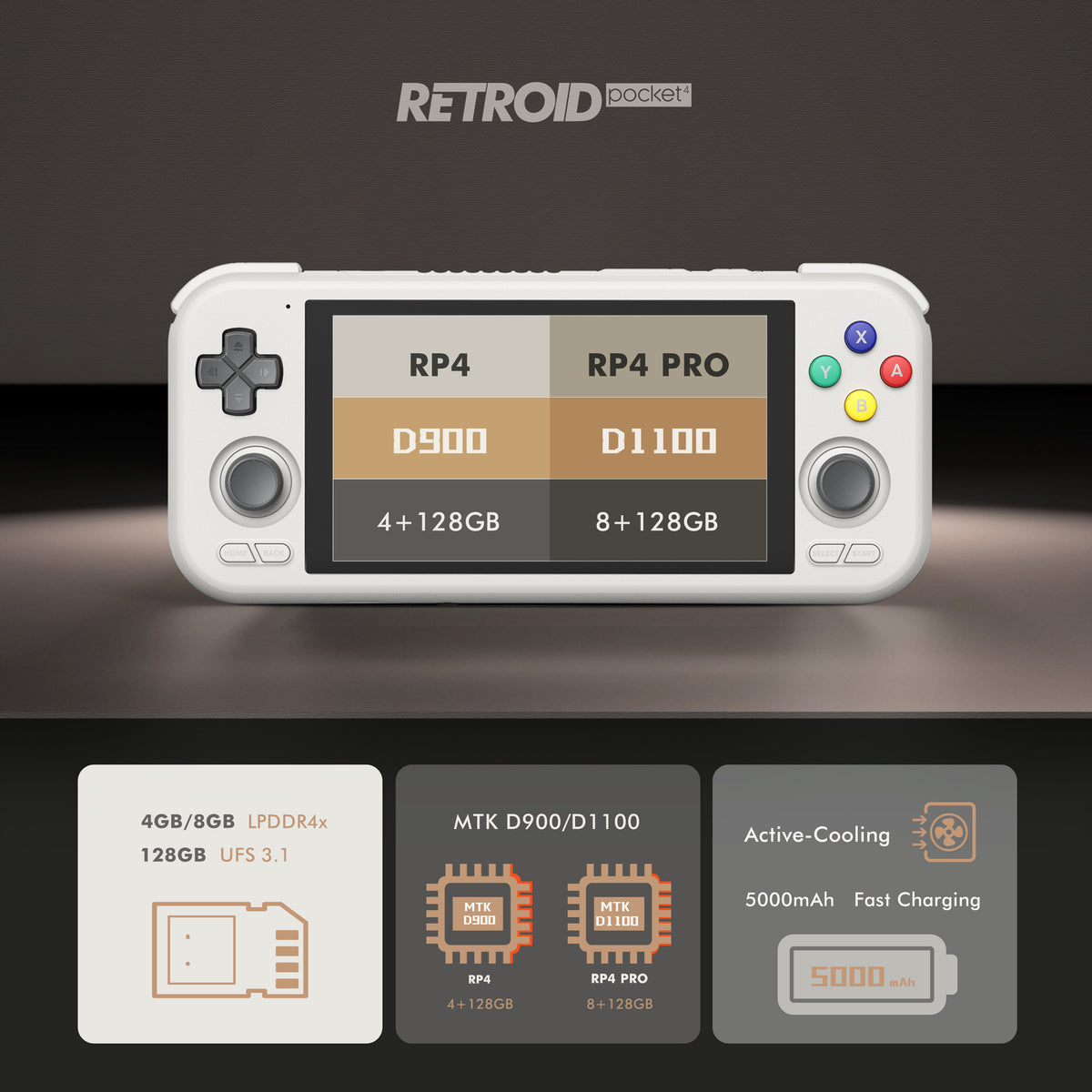
Retroid Pocket 4 Pro
4.7-inch IPS, Android 13, Dimensity 1100
Image: Retroid
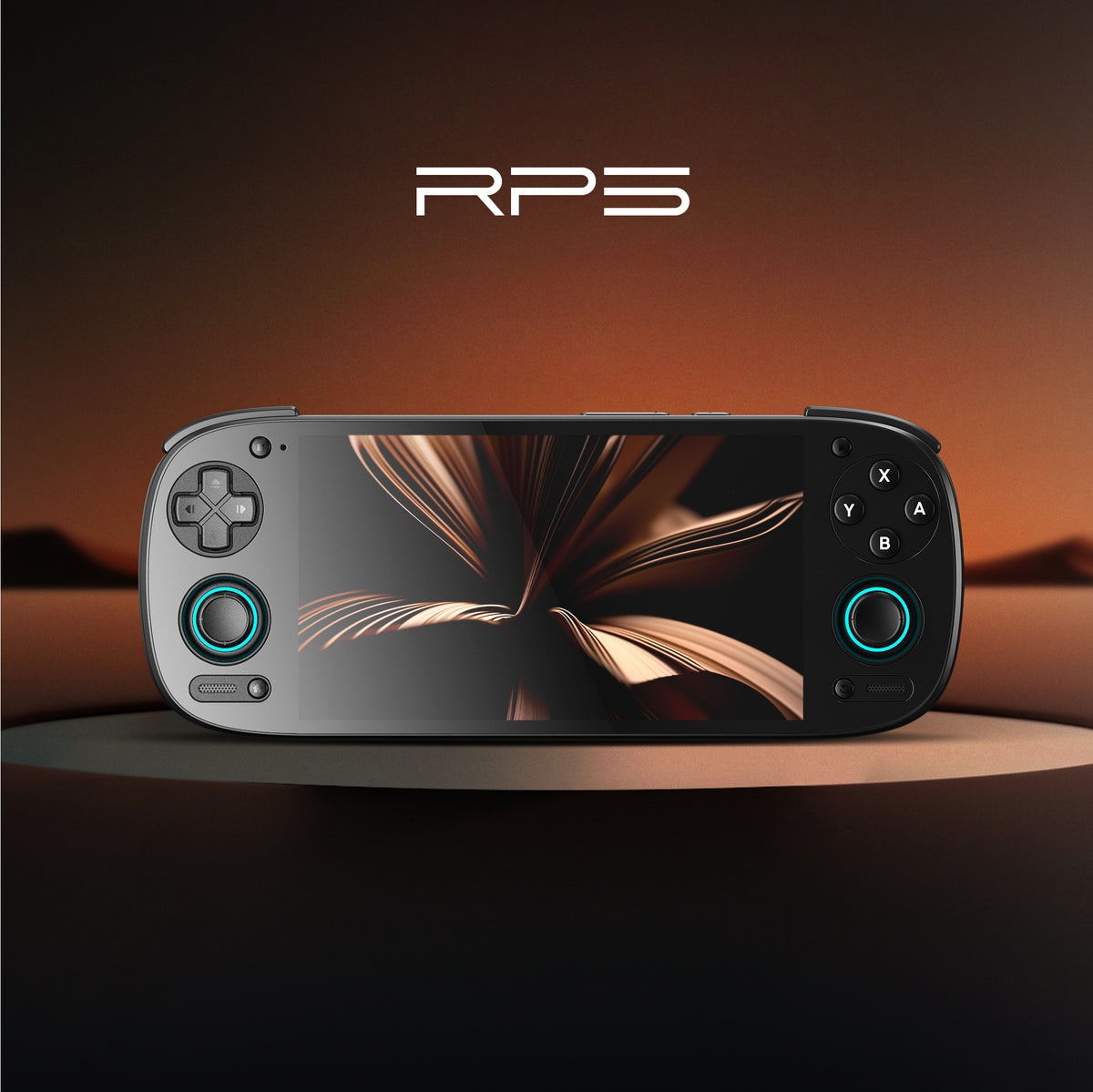
Retroid Pocket 5
5.5-inch AMOLED, Android 13, Snapdragon 865
Image: Retroid
Specifications side-by-side
| Spec | Retroid Pocket 4 Pro | Retroid Pocket 5 |
|---|---|---|
| SoC | MediaTek Dimensity 1100 (6nm) | Qualcomm Snapdragon 865 |
| CPU cores | 4× Cortex-A78 @ 2.6 GHz + 4× Cortex-A55 @ 2.0 GHz | 1× Kryo 585 @ 2.84 GHz + 3× Kryo 585 @ 2.42 GHz + 4× Kryo 585 @ 1.8 GHz |
| GPU | Mali-G77 MC9 @ 836 MHz | Qualcomm Adreno 650 |
| RAM | 8 GB LPDDR4X | 8 GB LPDDR4X |
| Storage | 128 GB UFS 3.1 + microSD | 128 GB UFS 3.1 + microSD |
| Screen size | 4.7-inch | 5.5-inch |
| Panel | IPS touchscreen | AMOLED touchscreen |
| Resolution | 750×1334 | 1920×1080 |
| Refresh rate | 60 Hz | 60 Hz |
| Battery | 5000 mAh | 5000 mAh |
| Weight | 251 g (reports vary — see note below) | Not confirmed in available data |
| Wi-Fi | Wi-Fi 6 | Wi-Fi 6 |
| Bluetooth | 5.2 | 5.1 |
| HDMI out | Micro HDMI | Micro HDMI |
| OS | Android 13 | Android 13 |
| Price (direct) | $149 | $219 |
| Release | January 2024 | September 2024 |
Build quality and ergonomics
Both devices use the same horizontal slab-with-grips form factor — think Switch Lite proportions, but with deeper grip cutouts. The controls are near-identical on paper: hall-effect analog sticks on both, L1/R1 digital, L2/R2 analog triggers, raised crosspad, ABXY face buttons, touchscreen, and an active cooling fan with rear vents. The fan matters: it enables sustained overclocking on both devices, which passive-cooled competitors can’t match.
The Pocket 5 is physically larger to accommodate the 5.5-inch screen, compared to 4.7 inches on the RP4 Pro. Whether that’s a benefit depends on your hands and pockets. The RP4 Pro is the more pocketable device. Both have a headphone jack — increasingly uncommon at these prices.
Hall-effect sticks on both devices is a genuine selling point. Drift is the long-term failure mode for most retro handhelds, and magnetic hall sensors eliminate it. You’ll still be gaming on these in three years without stick drift, where a conventional potentiometer would likely have degraded.
Screen
This is where the gap becomes hard to argue away. The Pocket 5 has a 5.5-inch 1920×1080 AMOLED panel. The Pocket 4 Pro has a 4.7-inch 750×1334 IPS. At 500 nits brightness, the RP4 Pro’s IPS is fine outdoors, but the pixel density and panel quality are simply not in the same league.
The 750×1334 resolution on the RP4 Pro has been flagged by reviewers as resulting in small, slightly soft on-screen text — the panel is physically 4.7 inches but the resolution doesn’t scale up the way a 1080p panel would. For emulation of retro content this is largely irrelevant (you’re rendering at sub-HD resolutions most of the time), but it matters for the Android home screen and emulator menus.
The AMOLED on the Pocket 5 delivers true blacks, higher contrast, and better colour saturation. For anything with dark scenes — Castlevania: SotN, Silent Hill, most PS1 RPGs — the difference is immediately visible. Multiple reviewers have highlighted it as the standout feature of the device at its price point.
Both screens run at 60 Hz.
Emulation performance
Retroid Pocket 4 Pro
Emulation performance — Retroid Pocket 4 Pro (Dimensity 1100)
- PS1 — DuckStationFull speed Perfect
- N64 — M64Plus FZFull speed Perfect
- Dreamcast — Flycast/RedreamFull speed Perfect
- PSP — PPSSPP (2-3x upscale)Full speed Perfect
- PS2 — NetherSX2Playable (most titles) Playable
- GameCube — DolphinPlayable (most titles) Playable
- Wii — DolphinPlayable (most titles) Playable
- Switch — Yuzu MMJChoppy (light 2D only) Choppy
Retroid Pocket 5
Emulation performance — Retroid Pocket 5 (Snapdragon 865)
- PS1 — DuckStationFull speed Perfect
- N64 — M64Plus FZFull speed Perfect
- Dreamcast — Flycast/RedreamFull speed Perfect
- PSP — PPSSPP (2-3x upscale)Full speed Perfect
- 3DS — Citra MMJFull speed Perfect
- PS2 — NetherSX2 (2x upscale)Full speed Perfect
- GameCube — DolphinFull library playable Perfect
- Wii — DolphinMost library playable Playable
- Switch — Yuzu MMJSelective (lighter 2D + some 3D) Playable
The practical gap between the two devices is clearest in PS2 and GameCube. On the Pocket 4 Pro, both platforms are playable but with caveats — demanding PS2 titles and heavier GameCube games will need settings adjustments. On the Pocket 5, the Snapdragon 865 handles the full GameCube library at playable speeds and the full PS2 library comfortably at 2x upscale, with most titles reaching 3x.
Switch emulation is a step down for both devices — and a significant one. The RP4 Pro handles simple 2D Switch games (think lighter indie titles) but struggles with flagship 3D. The Pocket 5 extends this to some 3D titles, but demanding games still require heavy compromises. Neither device is a serious Switch emulation machine. The Pocket 5 is the better option there by a clear margin, but if Switch is your primary target, look at the AYN Odin 2.
The Pocket 5 also adds proper 3DS emulation via Citra MMJ across the full library — not covered by the RP4 Pro’s fact sheet.
Firmware and software
Both devices ship with Android 13 and no official upgrade path to a newer Android version has been announced for either. The Android base means you’re installing emulators from the Play Store or sideloading APKs — DuckStation, Dolphin, PPSSPP, M64Plus FZ, NetherSX2, and Yuzu MMJ all run natively.
The Pocket 5 additionally has community Linux support as an alternative OS, which gives you access to RetroArch and Mupen64Plus-Next for lower-level control. This is an unofficial path but well-documented. The RP4 Pro’s fact sheet does not mention Linux support.
Neither device runs a dedicated front-end firmware out of the box — you’re on a standard Android launcher and manage your own emulator setup. Some buyers install Daijishō or ArkOS-style front-ends from the community; this is a normal part of setting these devices up.
Both ship with Wi-Fi 6 — a connectivity tier that’s above typical for this price segment — and both include micro HDMI out for TV play.
Value and buyer notes
At $149 direct from goretroid.com, the Pocket 4 Pro is one of the stronger value propositions in Android handheld emulation. The $219 Pocket 5 costs 47% more for — depending on your use case — a screen upgrade that’s immediately obvious and a performance tier that opens up the full GameCube and PS2 libraries. That’s not an incremental upgrade; it’s a meaningful one.
Be careful on Amazon. The RP4 Pro lists at $199–$249 on Amazon US, a significant markup over the $149 direct price. Buy direct from goretroid.com or via droix.net in Europe.
The Pocket 5 launched in September 2024, making it the newer device. The RP4 Pro released in January 2024. Both are current and in stock as of this writing.
A note on battery: both devices have 5000 mAh batteries. The Pocket 5 has been measured at approximately 3 hours 35 minutes under heavy emulation (Switch-class workloads at max settings) by Joey’s Retro Handhelds. The RP4 Pro’s battery life is reported as multi-hour under standard performance but is heavily reduced when overclocking — no specific measured figure is in the reviewed sources. Expect similar real-world endurance at comparable workloads given identical battery capacity.
Who should buy which
Pros
- + Strong value at $149 direct
- + Handles PS1, N64, Dreamcast, PSP, and most PS2 at full speed
- + Hall-effect sticks prevent long-term drift
- + Wi-Fi 6 and Bluetooth 5.2
- + Active cooling enables overclocking
- + Micro HDMI out for TV use
Cons
- − 750×1334 IPS — noticeably lower resolution and contrast than AMOLED
- − Reviewers flag small on-screen text at this resolution
- − GameCube and demanding PS2 titles need settings babysitting
- − Switch emulation limited to simple 2D titles
- − No community Linux support documented
Pros
- + 5.5-inch 1920×1080 AMOLED — the best screen in this price bracket
- + Snapdragon 865 handles full GameCube library and PS2 at 2–3x upscale
- + Full 3DS library via Citra MMJ
- + Switch emulation extends to lighter 3D titles
- + Community Linux support available
- + Hall-effect sticks, active cooling, same connectivity advantages as RP4 Pro
Cons
- − $219 — $70 more than the RP4 Pro direct
- − Still not a serious Switch emulation device for demanding 3D titles
- − Heavier battery drain under max settings (~3h35m measured)
- − Larger chassis than the RP4 Pro — less pocketable
- − Weight not confirmed in available specs data
Buy the Retroid Pocket 4 Pro if your emulation ceiling is PSP, PS1, Dreamcast, N64, and light-to-moderate PS2. The Dimensity 1100 handles all of that without complaint, and the $149 price is hard to beat in the Android handheld segment. It’s also the right pick if you genuinely prefer a smaller device.
Buy the Retroid Pocket 5 if GameCube or heavy PS2 are priorities, or if the AMOLED panel matters to you — and it should. Once you’ve seen SotN or any dark PS1 title on a proper AMOLED, going back to IPS feels like a step backward. The extra $70 buys a screen and a SoC tier that are both meaningfully better, not just marginally so.