Comparison
The Best Handhelds for PS2 Emulation in 2026
PS2 is the hardest common platform to emulate on handheld hardware. Here are the devices that genuinely run PS2 well — and which to skip.
Zürich, Switzerland
Published April 21, 2026
PS2 emulation is where most retro handhelds hit a wall. The PlayStation 2’s Emotion Engine was notoriously difficult to emulate even on desktop hardware, and in 2026 only a narrow band of ARM-based Android handhelds can genuinely run the majority of the library at playable speeds. If you’re choosing hardware specifically to play PS2 games on the go, two devices that sit in the same price bracket deserve serious attention: Anbernic’s RG556 and the Retroid Pocket 4 Pro.
Both run Android 13, both carry 8 GB of LPDDR4X RAM, and both land under $190 at direct pricing. The differences — screen technology, SoC performance, form factor, and cooling — are exactly what separates a capable PS2 machine from a great one. The Retroid Pocket 4 Pro edges ahead for most buyers wanting broader PS2 library coverage, but the RG556’s 5.48-inch AMOLED screen makes a compelling case if display quality is your priority.
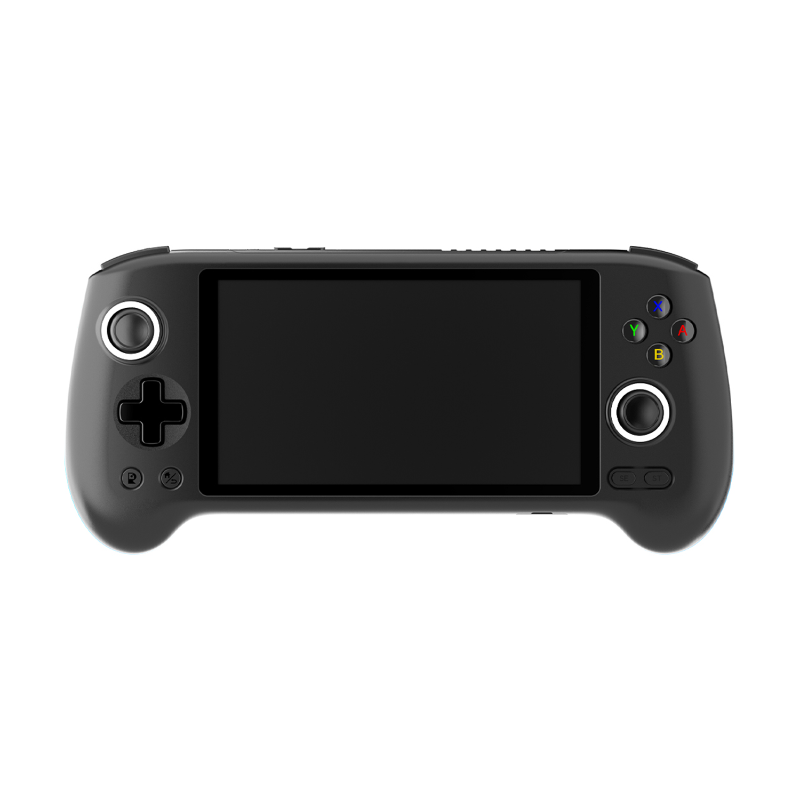
Anbernic RG556
5.48" AMOLED, Android 13, Unisoc T820
Image: Anbernic
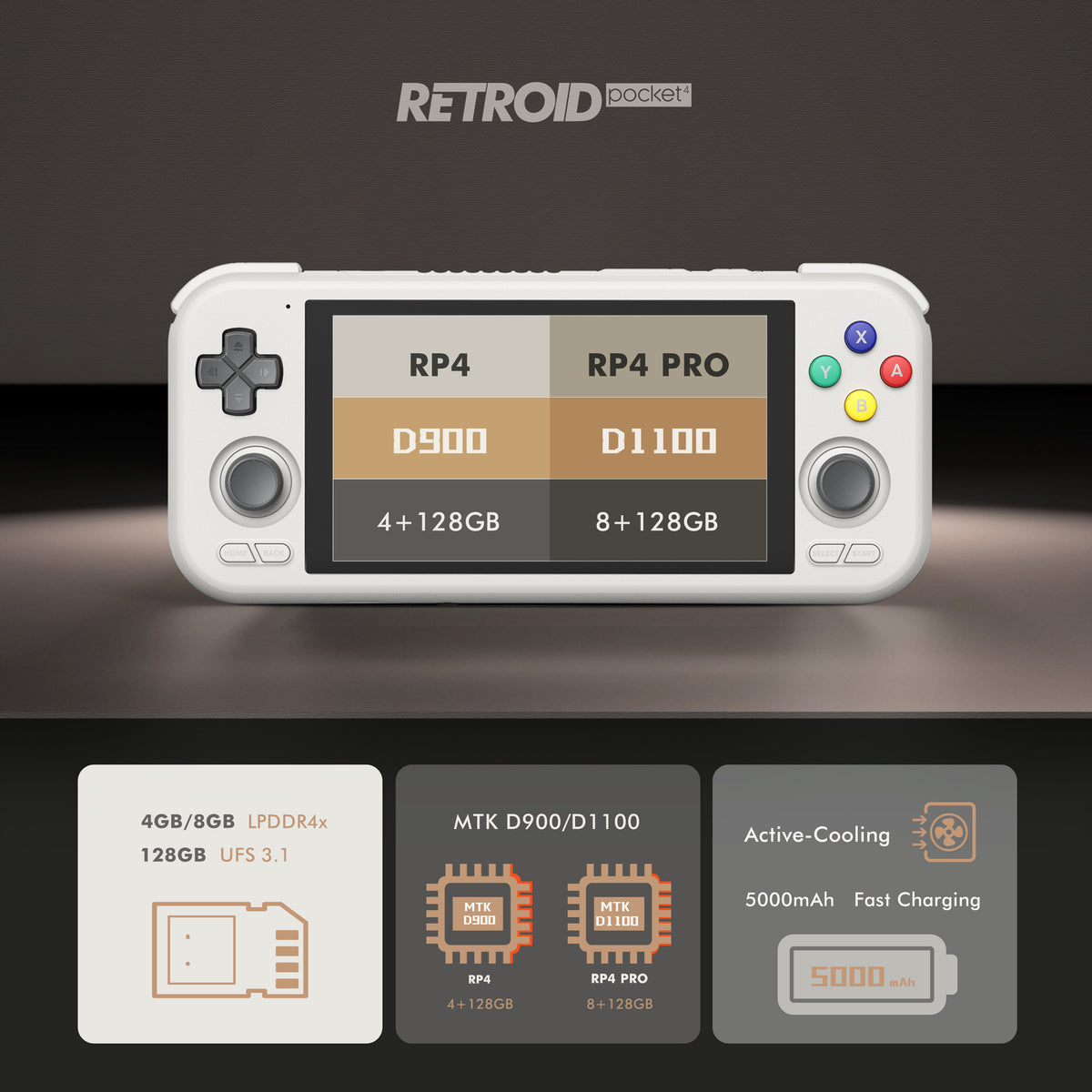
Retroid Pocket 4 Pro
4.7" IPS, Android 13, Dimensity 1100
Image: Retroid
Specifications side-by-side
| Spec | Anbernic RG556 | Retroid Pocket 4 Pro |
|---|---|---|
| SoC | Unisoc T820 (6nm EUV) | MediaTek Dimensity 1100 (6nm) |
| CPU cores | 1×A76 @ 2.7 GHz + 3×A76 @ 2.3 GHz + 4×A55 @ 2.1 GHz | 4×Cortex-A78 @ 2.6 GHz + 4×Cortex-A55 @ 2.0 GHz |
| GPU | Mali-G57 MC4 @ 850 MHz | Mali-G77 MC9 @ 836 MHz |
| RAM | 8 GB LPDDR4X | 8 GB LPDDR4X |
| Storage | 128 GB UFS 2.2 | 128 GB UFS 3.1 |
| Screen | 5.48-inch AMOLED, 1080×1920 | 4.7-inch IPS, 750×1334 |
| Aspect ratio | 16:9 | 16:9 (stretched) |
| Battery | 5500 mAh | 5000 mAh |
| Weight | 331 g | 251 g |
| OS | Android 13 (RG Launcher) | Android 13 |
| WiFi | WiFi 5 (802.11ac) | WiFi 6 |
| Price (direct) | ~$169.99 | ~$139–149 |
| Released | April 2024 | January 2024 |
The GPU difference is more significant than the clock speeds suggest. The Mali-G77 MC9 in the Dimensity 1100 has nine shader cores versus four in the RG556’s Mali-G57 — that GPU width matters when AetherSX2 and NetherSX2 push upscaled PS2 rendering. The RG556’s stronger single-core CPU frequency (one A76 at 2.7 GHz) helps in emulator threads that are heavily single-threaded, which partially compensates.
Build quality and ergonomics
The RG556 is a large device. At 223 × 90 × 15 mm and 331 g, it sits at the upper end of what you’d comfortably pocket — though the rear grips make extended sessions surprisingly manageable. The Retroid Pocket 4 Pro is noticeably more portable at 184.8 × 82.6 × 15.8 mm and 251 g, closer to a Switch Lite in hand feel.
Both devices use hall-effect analog sticks, which matters for long emulation sessions — drift-prone potentiometer sticks are a recurring complaint on cheaper hardware. Both also have analog L2/R2 triggers, useful if you ever drop into Android gaming beyond emulation.
The RP4 Pro’s active cooling fan is a meaningful differentiator for PS2 specifically. PS2 emulation is thermally demanding, and passive-cooled devices throttle under sustained load. The RG556 does not list active cooling in its spec sheet — the RP4 Pro’s fan enables sustained overclocking and consistent performance over long play sessions per XDA’s review. For a platform as demanding as PS2, that thermal headroom is real.
Screen
This is where the RG556 genuinely wins. A 5.48-inch AMOLED panel at 1080×1920 with full OCA lamination is the best screen in this price range. AMOLED blacks make PS2’s frequent dark corridors — Silent Hill 2, MGS3 jungle sequences — look dramatically better than any IPS panel can manage. Reviewers do note a default blue tint that requires a manual switch to Standard color mode in display settings, but once corrected, the picture quality is excellent.
The RP4 Pro’s 4.7-inch IPS at 750×1334 is a competent panel — 500 nits brightness keeps it usable outdoors — but the lower resolution at that screen size means XDA reviewers noted small on-screen text as a real usability issue. For emulation itself, resolution is less critical (the emulator renders at whatever upscale you set), but the AMOLED contrast advantage of the RG556 is hard to ignore if you care about image quality.
Both screens run at 60 Hz refresh.
Emulation performance
Anbernic RG556 — emulation performance
- PS1 — Crash Team Racing (5× upscale)Full speed Perfect
- N64 — Super Mario 64 (1440×1080)Full speed Perfect
- Dreamcast — Redream (1920×1440)Full speed Perfect
- PSP — Daxter (PPSSPP 3×)Full speed Perfect
- PS2 — GTA III (2× upscale)Playable Playable
- PS2 — Ratchet & Clank (2×)Minor chugging Playable
- GameCube — Mario Sunshine (720p)Playable Playable
- GameCube — F-Zero GX~40 fps or below Choppy
- Switch — 3D titlesStruggles Choppy
Retroid Pocket 4 Pro — emulation performance
- PS1 — multiple titlesFull speed Perfect
- N64 — multiple titlesFull speed Perfect
- Dreamcast — multiple titlesFull speed Perfect
- PSP — multiple titlesFull speed Perfect
- PS2 — most tested titlesPlayable Playable
- GameCube — most tested titlesPlayable Playable
- Wii — most tested titlesPlayable Playable
- Switch — 3D titlesStruggles Choppy
On PS2 specifically, both devices run the platform — but with different headroom. The RG556 community testing shows 2× upscale as the sweet spot, with demanding titles like Metal Gear Solid 3 running “amazingly” and GTA III excellent at that setting. Push to 3× and performance degrades. The Retroid Pocket 4 Pro’s Dimensity 1100 with its nine-core GPU handles “most PS2 titles” well per multiple reviews, with reviewers specifically calling out PS2 as a flagship use case. Neither device has published specific fps numbers for PS2 in reviewed sources — claims of exact frame rates should be treated with skepticism until you see them from a named review.
Neither device touches Nintendo Switch 3D titles meaningfully. That category requires Snapdragon 8 Gen 1 or better.
Firmware and software
Both devices ship with Android 13. The RP4 Pro runs a relatively clean Android launcher that most users find acceptable out of the box. The RG556 ships with Anbernic’s RG Launcher frontend, which is widely criticized in the community — most owners replace it with Daijisho or similar third-party launchers within hours of unboxing. This isn’t a dealbreaker, but it’s friction Anbernic shouldn’t be adding at $170+.
For PS2 specifically, you’ll want AetherSX2 or the community-maintained NetherSX2 fork on either device. Both are Android-native and run identically on both handhelds. Neither device has an official Android upgrade roadmap announced; both are locked to Android 13 as of April 2026.
The RP4 Pro’s WiFi 6 is a real advantage if you use network features — ROM streaming, cloud saves, or online multiplayer in supported emulators. The RG556’s WiFi 5 is adequate but noticeably behind.
Who should buy which
Retroid Pocket 4 Pro
Pros
- + Dimensity 1100 with 9-core GPU handles the broadest PS2 library
- + Active cooling fan prevents throttling in long PS2 sessions
- + Lighter at 251 g — meaningfully more portable
- + WiFi 6 and Bluetooth 5.2
- + $139–149 direct is the best price-to-PS2-performance ratio in this bracket
- + UFS 3.1 storage is faster than RG556's UFS 2.2
Cons
- − 4.7-inch IPS at 750×1334 — lower resolution and IPS contrast vs AMOLED
- − Small on-screen text noted by XDA reviewers
- − No active display technology like AMOLED
Anbernic RG556
Pros
- + 5.48-inch AMOLED with OCA lamination — the best screen in this price range
- + 1080×1920 native resolution for crisp UI and video content
- + 5500 mAh battery (500 mAh more than RP4 Pro)
- + Hall-effect sticks with RGB lighting
- + DisplayPort output via USB-C for TV use
Cons
- − 331 g — noticeably heavy for handheld use
- − No active cooling; thermal throttling is a real concern under sustained PS2 load
- − RG Launcher frontend is poor; expect to replace it immediately
- − Default blue tint requires manual color mode correction
- − $169.99 — $20–30 more than the RP4 Pro for lower PS2 headroom
For most people buying specifically for PS2 emulation, the Retroid Pocket 4 Pro is the clearer recommendation. The active cooling alone justifies the choice — PS2 emulation is a sustained CPU/GPU workload, and thermal management matters more than people expect until their first throttle mid-game. The lower price is a bonus.
The RG556 wins one scenario clearly: if you plan to use the device primarily for watching video content, playing PS1/PSP/N64 as much as PS2, and you want the best possible screen for the money, the AMOLED panel is worth the trade-offs. It’s a better media device. It’s not quite as good a PS2 device.