Comparison
Best Android Retro Handhelds Under $200 in 2026
Sub-$200 Android handhelds worth buying: Retroid Pocket 4 Pro, Anbernic RG556, Anbernic RG406V. Hands-on comparison by emulation tier and ergonomics.
Zürich, Switzerland
Published May 11, 2026
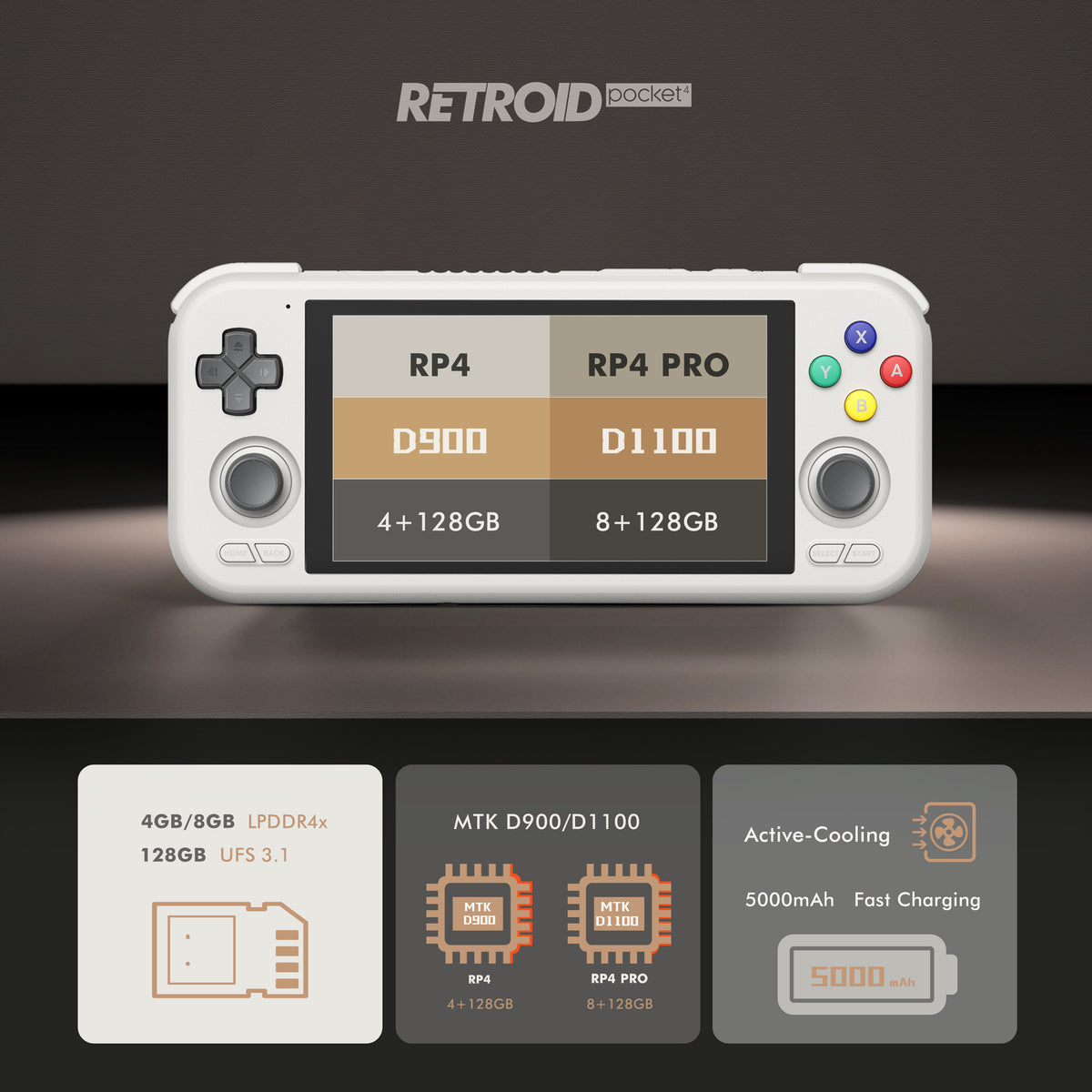
Retroid Pocket 4 Pro
4.7" IPS, Android 13, Dimensity 1100
Image: Retroid
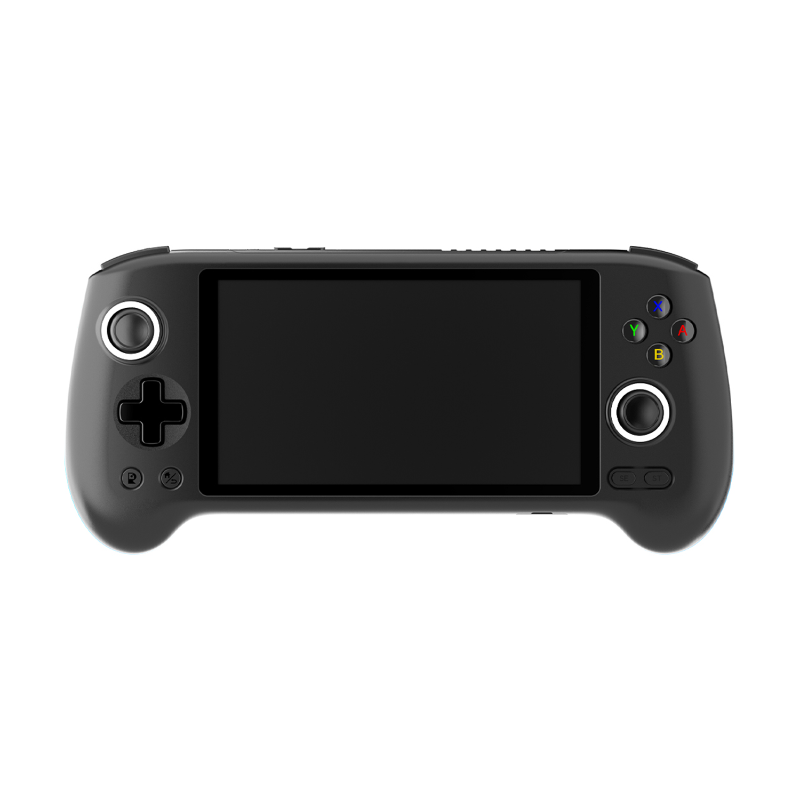
Anbernic RG556
5.48" AMOLED, Android 13, Unisoc T820
Image: Anbernic
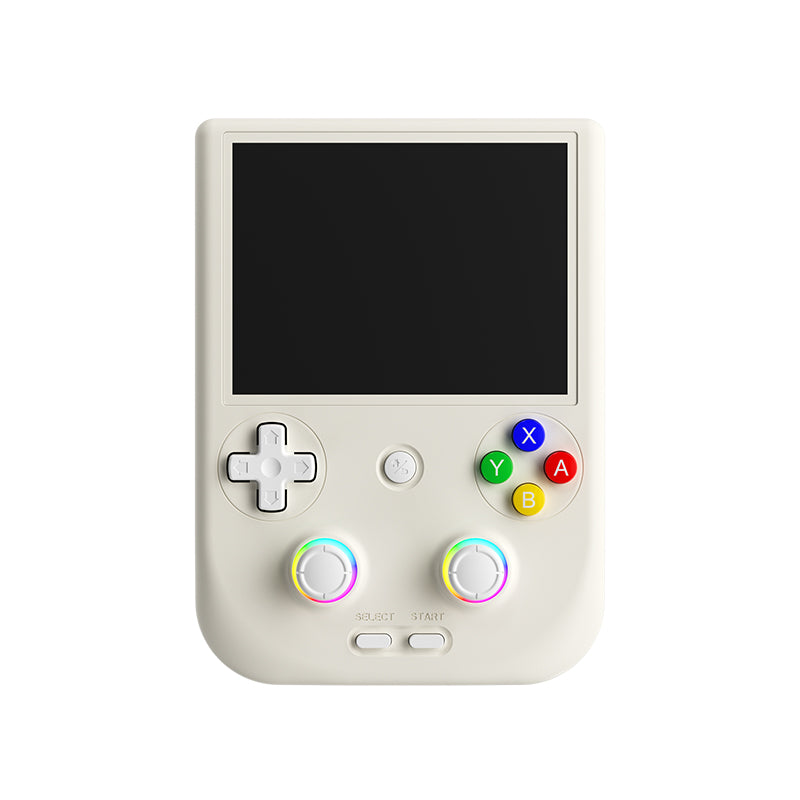
Anbernic RG406V
4.0" IPS 4:3, Android 13, Unisoc T820
Image: Anbernic
The sub-$200 Android handheld bracket used to mean compromises. In 2024 and into 2026, three devices have changed that: the Retroid Pocket 4 Pro, the Anbernic RG556, and the Anbernic RG406V. All three run Android 13, pack 8 GB of RAM, and share the same rough price ceiling — but they make very different trade-offs around screen size, form factor, and raw emulation headroom.
If you want one recommendation to start with: the Retroid Pocket 4 Pro at $149 direct is the most balanced of the three for most buyers. The RG556 is the one to choose if screen quality is the deciding factor. The RG406V earns its place as the only vertical-form device in this tier that can run PS2 and GameCube at playable speeds.
Specifications side-by-side
| Spec | Retroid Pocket 4 Pro | Anbernic RG556 | Anbernic RG406V |
|---|---|---|---|
| SoC | MediaTek Dimensity 1100 (6nm) | Unisoc T820 (6nm EUV) | Unisoc T820 (6nm) |
| GPU | Mali-G77 MC9 @ 836 MHz | Mali-G57 MC4 @ 850 MHz | Mali-G57 MC4 @ 850 MHz |
| RAM | 8 GB LPDDR4X | 8 GB LPDDR4X | 8 GB LPDDR4X |
| Storage | 128 GB UFS 3.1 | 128 GB UFS 2.2 | 128 GB UFS 2.2 |
| Screen | 4.7-inch IPS, 750×1334 | 5.48-inch AMOLED, 1080×1920 | 4.0-inch IPS, 960×720 |
| Aspect ratio | 16:9 | 16:9 | 4:3 |
| Battery | 5000 mAh | 5500 mAh | 5500 mAh |
| Weight | 251 g | 331 g | — |
| Wi-Fi | Wi-Fi 6 | Wi-Fi 5 (802.11ac) | Wi-Fi 5 |
| Bluetooth | 5.2 | 5.0 | 5.0 |
| Video out | Micro HDMI | USB-C DisplayPort | USB-C DisplayPort |
| Analog sticks | Hall effect | Hall effect | Hall effect |
| OS | Android 13 | Android 13 + RG Launcher | Android 13 + RG Launcher |
| Release | January 2024 | April 2024 | October 2024 |
| Price (direct) | $149 | $169.99 (sale) / $184.99 MSRP | $179 |
The storage spec gap is real: the RP4 Pro’s UFS 3.1 is a generation faster than the UFS 2.2 in both Anbernic devices. In practice this matters most for PS2 ISO loading times and large game library scanning.
Build quality and ergonomics
The Retroid Pocket 4 Pro is the lightest of the three at 251 g, with a horizontal slab layout measuring 184.8 × 82.6 × 15.8 mm. It’s closest in feel to a Switch Lite, and that’s not a bad comparison: the grips are shallow but present, and it disappears into a jacket pocket more readily than either Anbernic device.
The RG556 is a noticeably larger device at 223 × 90 × 15 mm and 331 g. Anbernic has added rear grips to manage the weight, and reviewers generally find it comfortable for longer sessions despite the heft. The RGB lighting around the analog sticks is a cosmetic addition — as of current firmware, the color is not user-customizable.
The RG406V takes a GameBoy-style vertical orientation, which makes it the most distinctive of the three in hand. Weight data isn’t confirmed in available sources, but the 4-inch 4:3 IPS screen at 960×720 fills the face of the device well. The six-axis gyroscope and 16 million-color RGB sticks are hardware features not found on the other two.
All three devices use hall-effect analog sticks, which matters for longevity. Anbernic specifically notes that the RG406V’s sticks resolve the cardinal-snapping issue present in older Anbernic hall-effect implementations.
Screen
This is where the three devices diverge most sharply. The RG556’s 5.48-inch AMOLED at 1080×1920 is the clear winner on pure display quality — full lamination via OCA bonding, true blacks, and enough resolution to make upscaled PS1 and N64 look genuinely clean. The default color preset ships with a blue tint; switching to Standard mode in display settings is the first thing you should do out of the box.
The RP4 Pro’s 4.7-inch IPS at 750×1334 sits in an awkward spot: the panel itself is fine at 500 nits brightness, but XDA’s review noted that on-screen text reads small for the display size — a consequence of the relatively low resolution stretched across a 4.7-inch area. For emulation content this matters less, since you’re mostly looking at game graphics rather than reading UI text.
The RG406V’s 4.0-inch IPS at 960×720 is purpose-built for 4:3 content. GBA, SNES, PS1, and N64 all display without horizontal letterboxing, and the pixel density is reasonable for the size. If your library leans heavily toward pre-widescreen content, the aspect ratio advantage is genuine.
Emulation performance
Retroid Pocket 4 Pro
Retroid Pocket 4 Pro — emulation performance
- PS1 — DuckStationFull speed Perfect
- N64 — M64Plus FZFull speed Perfect
- Dreamcast — Flycast / RedreamFull speed Perfect
- PSP — PPSSPPFull speed Perfect
- PS2 — AetherSX2/NetherSX2Playable — most titles Playable
- GameCube — DolphinPlayable — most titles Playable
- Wii — DolphinPlayable — most titles Playable
- Switch — Yuzu/SudachiChoppy on 3D titles Choppy
The Dimensity 1100 is the stronger chip for PS2 emulation in this bracket. XDA reviewers played through PS2, Wii, and GameCube content and described performance as great across most tested titles — no specific frame numbers were published, but the qualitative conclusion is consistent across sources. The active cooling fan is a genuine differentiator: it enables sustained performance under load without the thermal throttling that passive-cooled competitors hit during long sessions.
Anbernic RG556
Anbernic RG556 — emulation performance
- PS1 — DuckStation (5x upscale)Full speed Perfect
- N64 — M64Plus FZ (1440×1080)Full speed Perfect
- Dreamcast — Redream (1920×1440)Full speed Perfect
- PSP — PPSSPP (2–3x upscale)Full speed Perfect
- PS2 — AetherSX2 (2x upscale)Playable — 2x sweet spot Playable
- GameCube — Dolphin (720p)Playable — demanding titles struggle Playable
- Wii — Dolphin (native)Playable — native only Playable
- 3DS — Citra MMJPlayable with MMJ variant Playable
- Switch — Yuzu/SudachiChoppy on 3D titles Choppy
The Unisoc T820 is a capable chip, but the Retrododo review reveals its limits under pressure: PS2 at 3x upscale causes struggles, GameCube at 720p is the sweet spot but demanding titles like F-Zero GX drop to 40 fps or below, and Wii needs to stay at native resolution for stable performance. None of this is surprising for the price, but it’s worth being clear-eyed about.
Where the T820 excels is in upscaling older content onto that AMOLED panel. Dreamcast at 1920×1440 through Redream, PS1 at 5x through DuckStation, N64 at 1440×1080 through M64Plus FZ — these all run cleanly, and the display makes them look genuinely impressive.
Anbernic RG406V
Anbernic RG406V — emulation performance
- PS1 — DuckStationFull speed with upscaling Perfect
- N64 — M64Plus FZFull speed Perfect
- Dreamcast — FlycastFull speed Perfect
- PSP — PPSSPPFull speed Perfect
- PS2 — AetherSX2 (2x sweet spot)Playable Playable
- GameCube — DolphinPlayable — 1x–2x Playable
- Wii — DolphinPlayable — most library Playable
- 3DS — Citra MMJPlayable Playable
The RG406V shares the Unisoc T820 with the RG556, so the emulation ceiling is essentially the same. The meaningful difference is the 4:3 screen: PS1 and N64 content fills the display without letterboxing, which is a real quality-of-life improvement for those libraries. The 3DS advantage deserves a mention — the wide screen actually works in your favour here, giving screen real estate for the dual-display layout that Citra MMJ renders.
Firmware and software
All three devices ship with Android 13, and all three support sideloading via standard APK installation. The RP4 Pro runs a relatively clean Android skin; the two Anbernic devices ship with Anbernic’s RG Launcher frontend, which is widely considered the weakest part of the package. Most community users replace it with Daijisho or Dig within the first hour of setup.
The RP4 Pro’s Wi-Fi 6 and Bluetooth 5.2 are notably above the segment norm — the RG556 and RG406V both ship with Wi-Fi 5 and Bluetooth 5.0. In practical terms this means faster ROM transfer speeds over local network on the RP4 Pro, and slightly better controller pairing reliability in congested RF environments.
None of the three devices have announced official Android upgrades beyond Android 13. If long-term OS support matters to you, that’s a risk shared across the entire category.
Value and buyer notes
The RP4 Pro’s $149 direct price from Retroid is the sharpest value in the group. Amazon US listings for the same device run $199–249 — a significant markup with no added benefit. Buy direct.
The RG556 sits at $169.99 on sale ($184.99 MSRP). The price premium over the RP4 Pro is essentially the cost of the AMOLED panel and the larger chassis. If you don’t specifically need that screen, the RP4 Pro’s Dimensity 1100 is the better emulation chip and the better value.
The RG406V at $179 is priced between the two, but it’s the most specialized device: vertical form factor, 4:3 screen, no performance advantage over the RG556. It’s the right choice for a specific type of buyer, not the default recommendation.
Cross-border warranty reality: all three manufacturers are Chinese OEMs. Warranty claims require shipping the device back at your cost, and practical resolution varies. Community support on Discord and GBATemp is the realistic first line of support for any of these devices.
Who should buy which
Retroid Pocket 4 Pro is the default pick for most buyers in this category. The Dimensity 1100 handles PS2 and GameCube better than the T820, the active cooling fan prevents sustained throttling, Wi-Fi 6 and Bluetooth 5.2 are genuinely better hardware, UFS 3.1 storage loads faster, and the $149 direct price undercuts both Anbernic devices. The 750×1334 IPS screen is the only meaningful downside: it’s not as sharp as the RG556’s AMOLED and the relatively low resolution shows at 4.7 inches.
Anbernic RG556 wins if the display is the priority. No other device in this price range has a 5.48-inch AMOLED panel at 1080×1920, and upscaled retro content on that screen is a qualitatively different experience. The RG556 is also the choice if you want the largest possible display for remote play or streaming use cases. Accept the trade-off: 331 g is heavy, the T820 has a slightly lower PS2/GameCube ceiling than the Dimensity 1100, and the stock launcher needs replacing immediately.
Anbernic RG406V is the underdog with a real use case: if you grew up with Game Boy and want a vertical handheld that runs PS2 and GameCube — not just GBA and SNES — this is the only device in the category that delivers it. The 4:3 screen is excellent for pre-widescreen content, the gyroscope opens up Wii motion emulation, and the updated hall-effect sticks fix the cardinal-snapping issue of earlier Anbernic hardware. It’s not for everyone, but for the right buyer it’s exactly the right device.
Pros
- + RP4 Pro: Dimensity 1100 is the strongest chip in the sub-$200 Android bracket
- + RP4 Pro: Active cooling fan enables sustained overclocking
- + RP4 Pro: Wi-Fi 6 + Bluetooth 5.2 — best connectivity specs in the tier
- + RG556: 5.48-inch AMOLED is the best display of any device in this price range
- + RG556: Largest screen makes retro upscaling genuinely impressive
- + RG406V: Only vertical-form PS2/GameCube-capable device in this bracket
- + RG406V: 4:3 aspect ratio is ideal for pre-widescreen library
- + All three: Hall-effect analog sticks, no drift by design
- + All three: 128 GB storage with microSD expansion
Cons
- − RP4 Pro: 750×1334 IPS is low resolution for a 4.7-inch display
- − RP4 Pro: Amazon listings are $50–100 above direct price — buy from goretroid.com
- − RG556: 331 g is heavy for extended handheld sessions
- − RG556: Stock RG Launcher is poor — replacement required on day one
- − RG556: RGB stick lighting not user-customizable on current firmware
- − RG406V: Weight data not publicly confirmed; form-factor niche limits appeal
- − All three: No official Android upgrade path beyond Android 13 announced
- − All three: Warranty claims require international shipping at buyer cost