Comparison
Anbernic RG556 vs Retroid Pocket 4 Pro: AMOLED vs Raw Power
The RG556's 5.48-inch AMOLED versus the Pocket 4 Pro's Dimensity 1100 — two different ways to spend around $180 on an Android handheld.
Zürich, Switzerland
Published April 21, 2026
The Anbernic RG556 and the Retroid Pocket 4 Pro sit within roughly $35 of each other and target the same buyer: someone who wants Android-based emulation up through PS2 and GameCube without paying flagship money. But they get there differently. The RG556 leads with a 5.48-inch AMOLED panel and a physically larger chassis; the RP4 Pro answers with a more compact design, an active cooling fan, and slightly stronger raw GPU credentials on paper. If you just want the short answer: the RP4 Pro is the better value for most buyers, but the RG556 wins on screen quality and isn’t a trivial trade-off.
Both devices run Android 13, both carry 8 GB of LPDDR4X RAM, and both use hall-effect analog sticks. The differences that actually matter in daily use — panel type, size, thermals, and a $35 price gap — are what this comparison is really about.
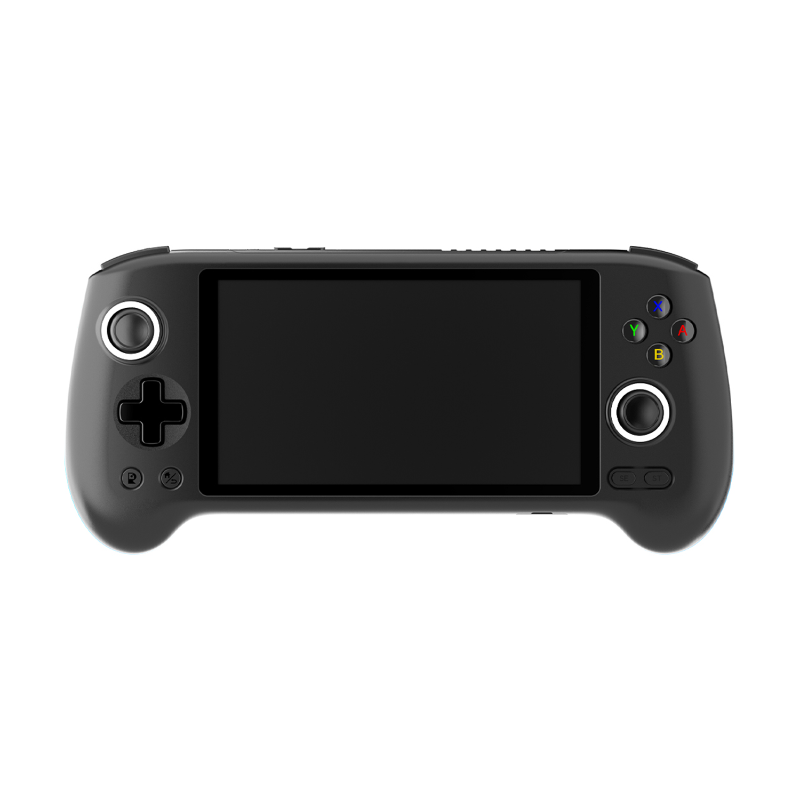
Anbernic RG556
5.48" AMOLED, Android 13, Unisoc T820
Image: Anbernic
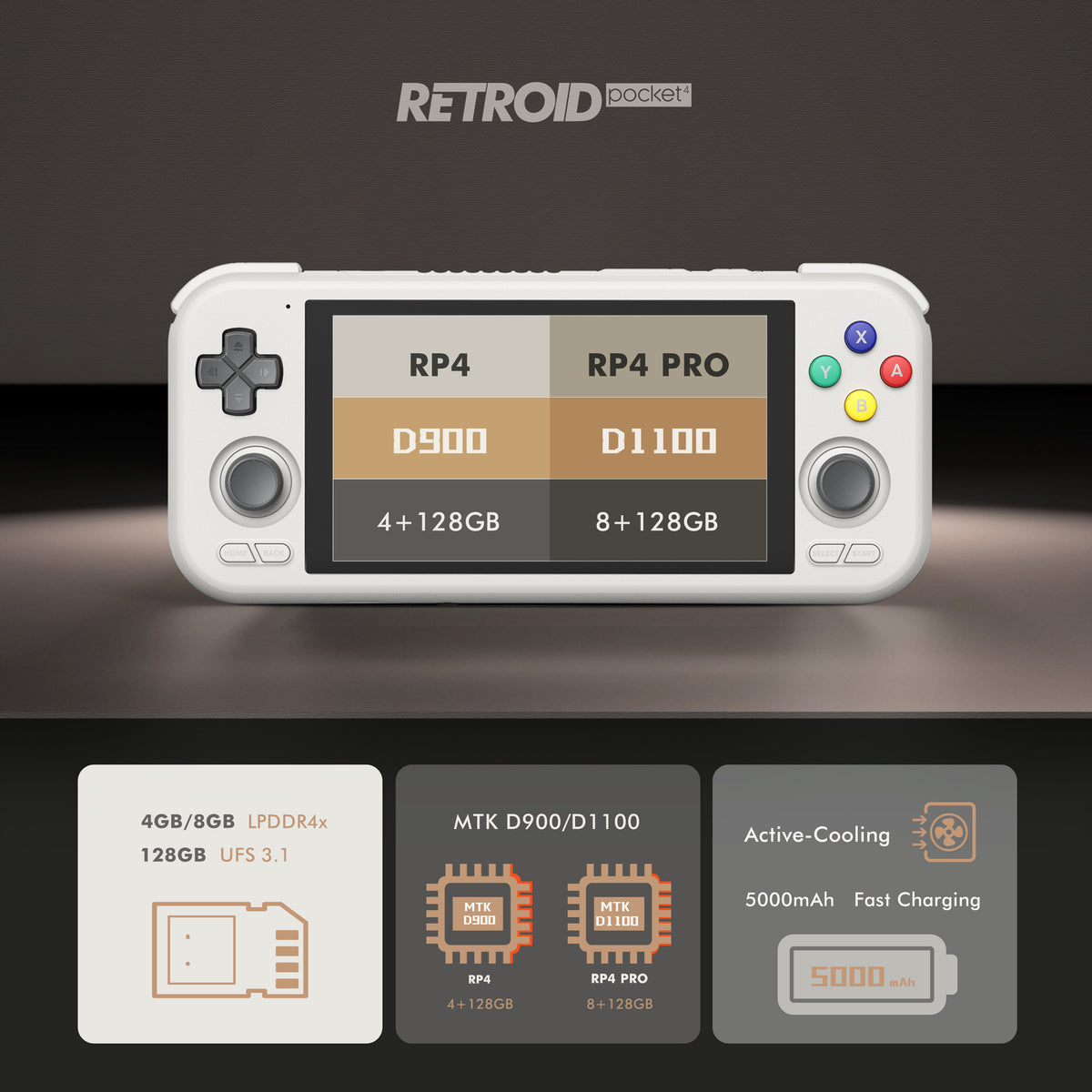
Retroid Pocket 4 Pro
4.7" IPS, Android 13, Dimensity 1100
Image: Retroid
Specifications side-by-side
| Spec | Anbernic RG556 | Retroid Pocket 4 Pro |
|---|---|---|
| SoC | Unisoc T820 (6nm EUV) | MediaTek Dimensity 1100 (6nm) |
| CPU | 1×A76 @ 2.7 GHz + 3×A76 @ 2.3 GHz + 4×A55 @ 2.1 GHz | 4×A78 @ 2.6 GHz + 4×A55 @ 2.0 GHz |
| GPU | Mali-G57 MC4 @ 850 MHz | Mali-G77 MC9 @ 836 MHz |
| RAM | 8 GB LPDDR4X | 8 GB LPDDR4X |
| Storage | 128 GB UFS 2.2 | 128 GB UFS 3.1 |
| Screen | 5.48-inch AMOLED, touch | 4.7-inch IPS, touch |
| Resolution | 1080×1920 | 750×1334 |
| Refresh rate | 60 Hz | 60 Hz |
| Battery | 5500 mAh | 5000 mAh |
| Weight | 331 g | 251 g |
| Dimensions | 223 × 90 × 15 mm | 184.8 × 82.6 × 15.8 mm |
| WiFi | WiFi 5 (802.11ac) | WiFi 6 |
| Bluetooth | 5.0 | 5.2 |
| Video out | DisplayPort via USB-C (1080p) | micro HDMI |
| Active cooling | No | Yes |
| OS | Android 13 | Android 13 |
| Price (direct) | $169.99–$184.99 | $139–$149 |
| Release | April 2024 | January 2024 |
The GPU spec deserves a closer look. The RP4 Pro’s Mali-G77 MC9 has nine shader cores versus the RG556’s Mali-G57 MC4 with four. Both clock at similar rates (850 MHz vs 836 MHz), but the core count gap is significant and partially explains why the RP4 Pro holds up comparably in GPU-bound workloads despite the T820’s beefy CPU cluster.
Build quality and ergonomics
The RG556 is a big device — 223 mm wide and 331 g. Held for ten minutes it feels premium; held for ninety it can cause forearm fatigue. Anbernic added rear grips that genuinely help distribute weight, and multiple reviewers confirm the device stays comfortable longer than the raw numbers suggest. The analog sticks use hall-effect sensors, which matters for longevity, and the L2/R2 triggers are pressure-sensitive, matching Xbox controller behaviour.
The RP4 Pro is meaningfully lighter at 251 g and notably more compact at 184.8 × 82.6 mm. Reports vary on exact weight — the manufacturer lists 269 g but XDA’s hands-on measured 251 g, so expect somewhere in that range. Either way, it fits in a jacket pocket where the RG556 does not. The RP4 Pro also has an active cooling fan with rear vents, which both keeps thermals in check during sustained sessions and enables overclocking. The RG556 has no fan; the T820’s 6nm process runs cool enough passively under normal emulation loads, but sustained high-demand workloads may throttle.
Both devices share a raised crosspad D-pad, dual hall-effect analog sticks, and L1/R1 digital plus L2/R2 analog shoulder buttons. Neither is missing any control for the emulation targets they’re designed for.
Screen
This is the RG556’s strongest card. The 5.48-inch AMOLED with OCA full lamination produces blacks that an IPS panel simply cannot match — contrast is effectively infinite, and the lamination eliminates the air gap that causes the washed-out look on cheaper screens. At 1080×1920 it’s a genuinely sharp display for retro content and upscaled PS2/GameCube output.
One real caveat: the display ships with a blue colour tint out of the box. The fix is straightforward (Settings → Display → Colours & Contrast → Standard), but you shouldn’t have to do it on a $170 device. Once corrected, the panel is excellent.
The RP4 Pro’s 4.7-inch IPS at 750×1334 is a step down in every measurable way — smaller, lower resolution, no AMOLED punch — but it’s rated at 500 nits brightness and holds up well outdoors. XDA reviewers noted that on-screen text appears small at this resolution and screen size, which matters more in Android’s UI than in emulation. At retro gaming resolutions, the IPS panel is perfectly adequate. The RP4 Pro also has a dedicated micro HDMI port for TV output; the RG556 uses DisplayPort alt mode over USB-C, which requires a compatible cable but outputs at 1080p.
If you’re buying primarily for the screen experience — watching a PS2 game upscaled to near-HD on a vivid AMOLED — the RG556 is the obvious pick and the price premium is justified on that criterion alone.
Emulation performance
Both devices handle everything up through Dreamcast and PSP without breaking a sweat. The differences emerge at PS2, GameCube, and anything above.
Anbernic RG556 — emulation performance
- PS1 — Crash Team Racing (DuckStation, 5x upscale)Full speed Perfect
- N64 — Super Mario 64 (M64Plus FZ, 1440×1080)Full speed Perfect
- Dreamcast — Redream (1920×1440)Full speed Perfect
- PSP — God of War: Ghost of Sparta (PPSSPP, 2x)Full speed Perfect
- PSP — Daxter (PPSSPP, 3x)Full speed Perfect
- PS2 — GTA III (AetherSX2/NetherSX2, 2x)Playable Playable
- PS2 — Metal Gear Solid 3 (2x)Playable Playable
- PS2 — Ratchet & Clank (2x)Playable, minor chugging Playable
- GameCube — Mario Kart Double Dash (Dolphin, 2x)Playable Playable
- GameCube — F-Zero GX (Dolphin)Choppy (~40 fps or below) Choppy
- Switch — 3D titles (Yuzu/Sudachi)Struggles Choppy
Retroid Pocket 4 Pro — emulation performance
- PS1 — full library (DuckStation)Full speed Perfect
- N64 — full speed on tested titlesFull speed Perfect
- Dreamcast — full library (Flycast/Redream)Full speed Perfect
- PSP — full library (PPSSPP)Full speed Perfect
- PS2 — most tested titlesPlayable Playable
- GameCube — most tested titles (Dolphin)Playable Playable
- Wii — most tested titles (Dolphin)Playable Playable
- Switch — 3D titlesStruggles Choppy
The honest read: these two devices are closer in emulation performance than their chip names suggest. The RG556’s T820 has a stronger single-core ceiling (that 2.7 GHz A76 matters for N64 and GameCube), and the reviewers give it specific data points like F-Zero GX struggling and Ratchet & Clank showing minor chugging. The RP4 Pro’s coverage is described more broadly (“performed great with most tested titles”) without the same game-by-game granularity.
Where the RP4 Pro has an edge: the active cooling fan means it can sustain performance longer in a hot ambient environment without throttling, and reviewers tested it at 99.5% consistency across 20 stress loops. The RG556 has no such sustained-load data published.
Both devices struggle with Switch emulation — lightweight 2D games show frame rate dips on the RG556 (community reports note Cuphead specifically), and the Dimensity 1100 class generally doesn’t fare better with 3D Switch titles.
Firmware and software
Both devices ship with Android 13 and are designed as Android handhelds first. Neither is running a custom Linux firmware like OnionOS or MinUI — this is the Android ecosystem with RetroArch, standalone emulators, and an app store.
The RG556 ships with Anbernic’s RG Launcher frontend, which is widely criticised by the community. Most users replace it with Daijisho or Dig within the first day; that’s an easy fix but it’s a telling statement about Anbernic’s software priorities. The underlying Android installation is otherwise clean enough.
The RP4 Pro ships with stock Android 13 and no dedicated launcher overlay, which means you start with a more vanilla Android experience that’s arguably easier to customise from a clean slate. Retroid has generally better community software support and documentation than Anbernic’s Android line.
Neither device has an announced upgrade path to Android 14 or later. WiFi 6 on the RP4 Pro and Bluetooth 5.2 are modest practical advantages if your router and audio gear support them; the RG556’s WiFi 5 / Bluetooth 5.0 are adequate but not leading-edge.
Value and buyer notes
At $169.99–$184.99 for the RG556 versus $139–$149 direct for the RP4 Pro, you’re paying roughly $35 more for the AMOLED and larger chassis. That’s a meaningful gap at this price tier.
One specific warning on the RP4 Pro: Amazon listings frequently show $199–$249, which is a significant markup over the $139–$149 direct price at goretroid.com. Always buy direct or from a known EU reseller.
The RG556’s 5500 mAh battery versus the RP4 Pro’s 5000 mAh is a 10% capacity advantage; Anbernic claims 8 hours of use per manufacturer, though no independently measured figure is available in current reviews. Charging the RG556 at 5V/2A takes approximately 3.5 hours for a full charge.
Who should buy which
Pros
- + Best screen in this price bracket — AMOLED with OCA lamination
- + Larger 5.48-inch panel ideal for PS2/GameCube upscaling
- + 5500 mAh battery for longer sessions
- + DisplayPort output via USB-C at 1080p
- + RGB lighting on sticks (non-customisable colour as of current firmware)
- + 128 GB UFS 2.2 + microSD expansion
Cons
- − 331 g is tiring in extended handheld sessions
- − Too large for any pocket — dedicated bag required
- − RG Launcher is poor; needs replacement immediately
- − Default display colour tint requires manual correction
- − WiFi 5 and Bluetooth 5.0 behind the RP4 Pro
- − No active cooling for sustained-load scenarios
- − $35 more expensive than the RP4 Pro
Pros
- + Significantly lighter at 251 g and pocketable at 184.8 × 82.6 mm
- + Active cooling fan for sustained performance and overclocking headroom
- + WiFi 6 and Bluetooth 5.2 — better connectivity spec for the price
- + UFS 3.1 storage is faster than the RG556's UFS 2.2
- + Cleaner Android setup with better community documentation
- + $35 cheaper direct — meaningful at this price tier
Cons
- − 4.7-inch IPS at 750×1334 is noticeably behind the RG556's AMOLED
- − Small on-screen text per XDA review at native resolution
- − 5000 mAh battery is adequate but not exceptional
- − Amazon pricing is frequently $199–$249 — must buy direct to get value
- − Weight reports conflict between 251 g (XDA hands-on) and 269 g (manufacturer)
Buy the RG556 if the screen is your priority — and for the right user it genuinely is. Watching a PS1 or Dreamcast game upscaled to near-HD on a 5.48-inch AMOLED is a qualitatively different experience from any IPS handheld at this price. If you primarily play at a desk or table, the weight is less of an issue.
Buy the Retroid Pocket 4 Pro if you want the better all-around value: lighter, more pocketable, actively cooled, better wireless specs, and meaningfully cheaper at direct pricing. The emulation ceiling is comparable for everything short of the most demanding GameCube titles, and the smaller IPS panel is fine for every platform through PSP. For most buyers in this price range, the RP4 Pro is the pragmatic choice.