Comparison
Anbernic RG35XX SP vs Miyoo Mini Plus: Clamshell vs Slab Under $70
Two of the most popular sub-$70 retro handhelds. Anbernic RG35XX SP's clamshell versus Miyoo Mini Plus's pocketable slab — which form factor wins?
Zürich, Switzerland
Published April 27, 2026
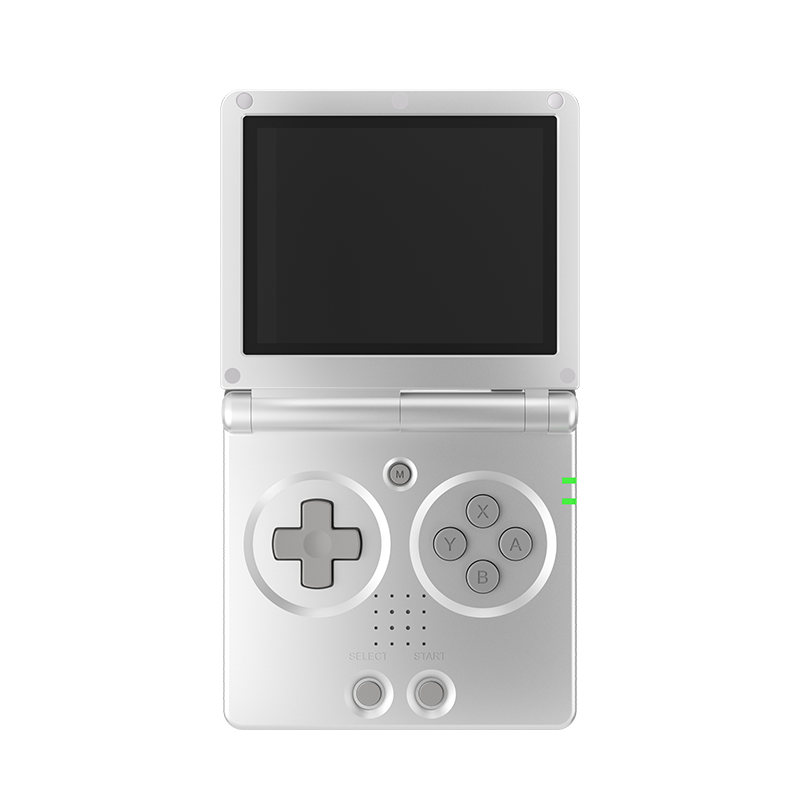
Anbernic
RG35XX SP
Image: Anbernic
- Price
- $64.99
- Released
- 2024
- SoC
- Allwinner H700
- Screen
- 3.5-inch IPS 640×480
Both of these handhelds sit under $70, run a 3.5-inch IPS screen at 640×480, have no analog sticks, and top out around PS1 emulation on a good day. On paper they’re nearly identical. In practice, they appeal to different people for different reasons, and picking the wrong one will annoy you every time you pull it out of your pocket.
The Miyoo Mini Plus is the older design — released in early 2023, now deeply mature firmware-wise, and absurdly light at 162 g. The RG35XX SP launched in mid-2024 as a deliberate Game Boy Advance SP tribute: clamshell hinge, 192 g, and the Allwinner H700 SoC that opens the door to N64 and Dreamcast territory the Mini Plus can’t touch. If you mostly play SNES and GBA and want the most pocketable device possible, the Mini Plus wins. If you want a screen-protecting hinge, more headroom in the emulation ceiling, and a wider firmware ecosystem, the SP is worth the extra ~$15.
Anbernic RG35XX SP
Clamshell GBA SP tribute, Allwinner H700, 3300 mAh
Image: Anbernic
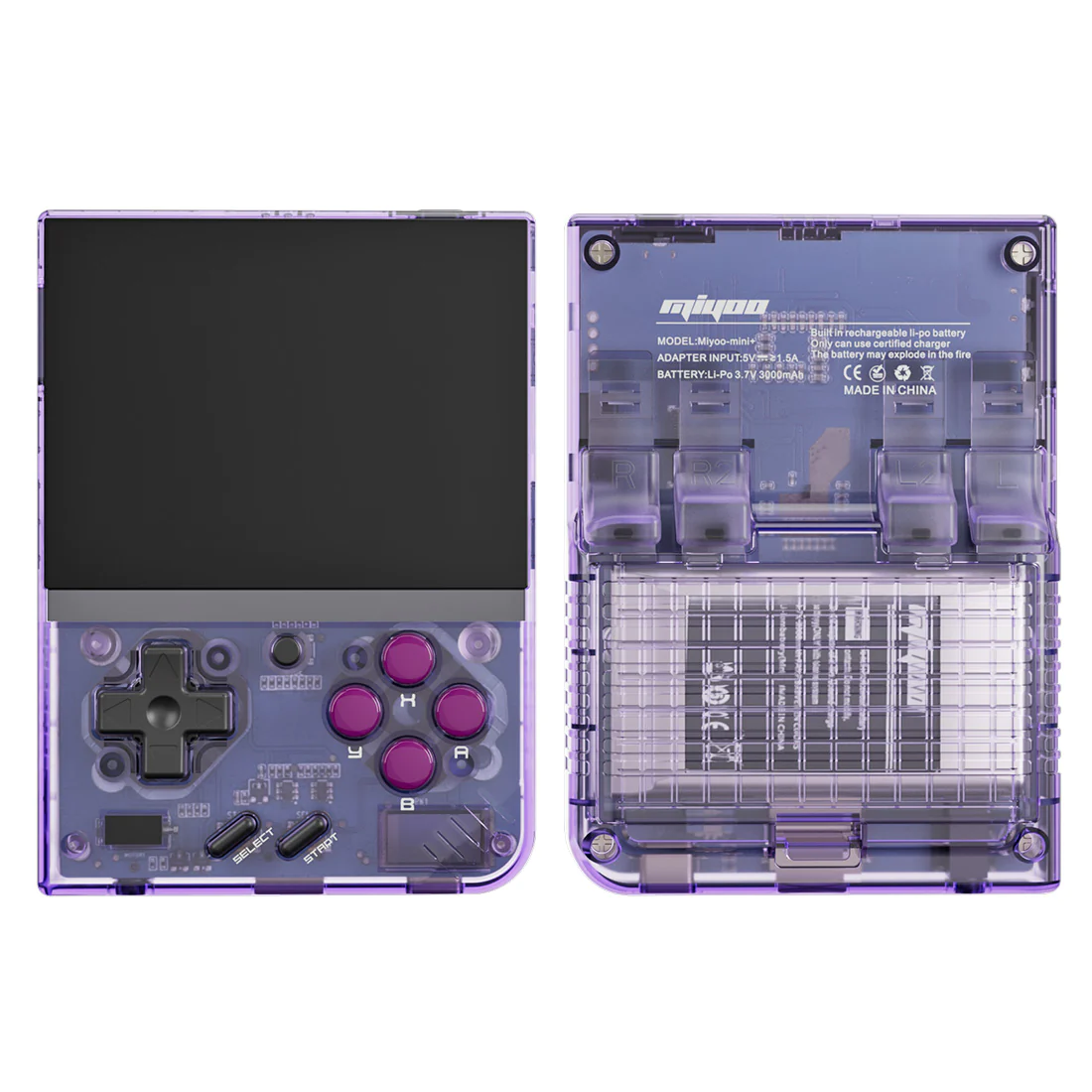
Miyoo Mini Plus
Vertical slab, 162 g, SigmaStar SSD202D, OnionOS
Image: Miyoo
Specifications side-by-side
| Spec | Anbernic RG35XX SP | Miyoo Mini Plus |
|---|---|---|
| SoC | Allwinner H700 (Quad-core Cortex-A53 @ 1.5 GHz) | SigmaStar SSD202D (Dual-core Cortex-A7 @ 1.2 GHz) |
| GPU | Mali-G31 MP2 | Integrated (ARM Mali-400 class per device class) |
| RAM | 1 GB LPDDR4 | 128 MB DDR3 |
| Storage | Dual microSD (up to 512 GB per slot per manufacturer) | Single microSD only (no internal storage) |
| Screen | 3.5-inch IPS, OCA laminated, 640×480 | 3.5-inch IPS, 640×480, 228 ppi |
| Aspect ratio | 4:3 | 4:3 |
| Battery | 3300 mAh (8 hrs per manufacturer) | 3000 mAh |
| Weight | 192 g | 162 g |
| Form factor | Clamshell | Vertical slab |
| Dimensions | 89 × 85 × 27 mm (closed) | 78.5 × 108 × 22.3 mm |
| Wi-Fi | 2.4/5 GHz (802.11 a/b/g/n/ac) | 2.4 GHz only |
| Bluetooth | 4.2 (controllers only per manufacturer) | None listed |
| HDMI out | Mini HDMI | No |
| Shoulder buttons | L1/R1/L2/R2 | L1/R1 only |
| Speaker | Mono | Stereo, front-facing |
| Stock OS | Anbernic Linux launcher | MiyooCFW Linux |
| Price (USD) | $64.99 MSRP / $57.99 sale | ~$50 MSRP |
| Released | May 2024 | March 2023 |
The RAM difference is not a footnote — it’s a wall. The Mini Plus at 128 MB DDR3 versus the SP’s 1 GB LPDDR4 is roughly an 8× gap, and it directly determines where each device’s emulation ceiling sits.
Build quality and ergonomics
The RG35XX SP is the heavier device at 192 g, but it earns that weight with the clamshell hinge. The screen folds shut when you’re done, which means no scratched display from keys or coins in your pocket. The 89 × 85 × 27 mm closed footprint is chunky but genuinely pocketable in a jacket. Reviewers describe the D-pad as crisp and the face buttons as tactile. The shoulder area is a real-world compromise though: the SP form factor limits surface area for the L2/R2 buttons, and they sit in positions that feel cramped compared to a traditional horizontal device.
The Miyoo Mini Plus at 162 g and 78.5 × 108 × 22.3 mm is one of the few handhelds in this class that disappears into a jeans pocket. The vertical slab format divides opinion — some people love the Game Boy Pocket feel, others find extended portrait-orientation play awkward for horizontal games. The D-pad is a genuine community favourite, frequently described as SNES-grade quality. The speakers are stereo and front-facing, which matters more than people expect until they try the SP’s mono speaker. The Mini Plus has no L2/R2 at all, which is a harder constraint than the SP’s cramped but present triggers.
One documented issue on some Mini Plus units: screen wobble due to loose adhesive. The community fix involves B-7000 glue or double-sided tape and is well-documented, but it’s still a QC footnote the SP doesn’t have.
Screen
Both devices share the same resolution (640×480) and aspect ratio (4:3) on a 3.5-inch panel, so the raw numbers are identical. The SP adds OCA full lamination, which eliminates the air gap between the glass and panel — colours look more saturated and glare is reduced. The Mini Plus is an unlaminated IPS panel at 228 ppi.
For GBA content specifically, the 240×160 native resolution doesn’t fill either screen — you get black bars at the sides on both. That’s a consequence of GBA’s 3:2 aspect ratio meeting a 4:3 display, and neither device solves it differently. For SNES and PS1, both screens render well at their native or slightly scaled resolutions.
The practical screen difference is the lamination. If you’ve used an OCA-laminated display versus a non-laminated one side by side, it’s noticeable — the SP’s screen looks like the image is painted on the glass rather than floating behind it.
Emulation performance
Anbernic RG35XX SP — emulation performance
- GBA — mGBAFull speed Perfect
- PS1 — PCSX ReARMedFull speed Perfect
- N64 — Mupen64Plus-NextPlayable Playable
- Dreamcast — FlycastPlayable Playable
- DS — DeSmuME/DraSticPlayable Playable
- PSP — PPSSPPChoppy at 1x Choppy
Miyoo Mini Plus — emulation performance
- NES — FCEUmmFull speed Perfect
- SNES — Snes9xFull speed Perfect
- GBA — mGBAFull speed Perfect
- PS1 — PCSX ReARMedFull speed Perfect
- DS — DraStic (OnionOS 4.3)Choppy (varies by title) Choppy
- N64 — Mupen64PlusNot practical Choppy
- Dreamcast — FlycastNot viable Choppy
The story here is clean: both devices are excellent for everything up to and including PS1. The SP extends that ceiling to N64 and Dreamcast at a playable — if not always smooth — framerate. The Mini Plus simply cannot run those platforms in any meaningful way given its 128 MB DDR3 constraint.
Where the Mini Plus wins on paper is SNES: reviewers describe it as “absolutely flawless” at that level, and the hardware is so comfortable with 16-bit content that it may actually deliver a slightly smoother experience than the SP, which is using more capable hardware for lighter work. In practice, both are perfect at SNES — the difference is headroom, not execution.
N64 on the SP has a specific caveat worth naming: without analog sticks, many N64 games are compromised even when they run at an acceptable framerate. The RG35XX SP maps C-buttons to R2, which works for some games and is frustrating for others. The SP can run N64; whether it’s enjoyable depends on the game.
Firmware and software
The Miyoo Mini Plus runs OnionOS in practice — stock firmware is almost never used. OnionOS is a mature, beginner-friendly launcher with RetroAchievements support, a built-in scraper, activity tracking, blue light filter, and VNC remote control. Version 4.3 added native DS support via DraStic and screen recording. It’s purpose-built for the Mini Plus and it shows: the setup experience is polished and the theme ecosystem is active. MinUI is a minimalist alternative for those who want something leaner.
The RG35XX SP ships with Anbernic’s own Linux launcher, which most users replace quickly. The main options are muOS (BEANS build for the SP specifically, distinct from the BANANA build used on the RG35XX Plus and H) and Knulli. Both support RetroAchievements and overclocking. Knulli adds PortMaster — native Linux ports of games like Stardew Valley and Celeste — and handles the SP’s hinge specifically: closing the lid triggers sleep mode. muOS is generally considered the more beginner-friendly of the two, with an active theme ecosystem and straightforward two-card setup. Neither muOS nor Knulli supports the Miyoo Mini Plus, and OnionOS does not support the SP — the firmwares are device-exclusive.
The SP also gains dual-band Wi-Fi (2.4/5 GHz, 802.11 a/b/g/n/ac) and Bluetooth 4.2 versus the Mini Plus’s 2.4 GHz-only Wi-Fi. For Wi-Fi scraping and RetroAchievements, the Mini Plus is sufficient. For pairing a Bluetooth controller on a TV via the SP’s mini HDMI output, the SP’s connectivity suite is materially more useful.
Value and buyer notes
The Mini Plus is the cheaper device by roughly $15 at full price. That gap narrows during sales, and the SP at $57.99 sale price is a strong value given the significant hardware step up. The Mini Plus has no HDMI output and no Bluetooth, which are hard constraints if you want TV output at any point. The SP’s mini HDMI makes it a capable couch device when paired with a Bluetooth controller.
Warranty on either device is the same reality: cross-border consumer rights are limited, Anbernic and Miyoo both operate out of China, and after-sales support is community-driven rather than formal. Factor in the landing cost and treat it as final-sale pricing.
Who should buy which
Pros
- + Clamshell hinge protects the screen — no scratches in your bag
- + Allwinner H700 pushes into N64 and Dreamcast territory
- + OCA-laminated display looks noticeably better
- + Dual microSD slots, mini HDMI out, dual-band Wi-Fi, Bluetooth 4.2
- + muOS and Knulli both actively developed for the SP
- + L1/R1/L2/R2 all present — important for PS1 titles requiring all four shoulders
- + Knulli PortMaster support for native Linux game ports
Cons
- − Mono speaker — noticeable step down from Mini Plus stereo
- − L2/R2 are flat and cramped due to clamshell form factor
- − No analog sticks makes N64 titles frustrating despite running
- − Heavier at 192 g versus 162 g
- − PSP is officially not recommended — choppy at 1x
Pros
- + 162 g and 78.5 × 108 mm — genuinely disappears in a pocket
- + D-pad quality is a community benchmark, consistently praised as SNES-grade
- + Stereo front-facing speakers
- + OnionOS is one of the most polished retro handheld firmware experiences available
- + Cheaper — around $50 MSRP
Cons
- − 128 MB DDR3 is a hard ceiling — N64 and Dreamcast are not viable
- − No L2/R2 at all — PS1 games using all four shoulders need remapping
- − No HDMI output, no Bluetooth
- − 2.4 GHz Wi-Fi only
- − Some units have screen wobble — minor, community-fixable, but present
- − Single microSD slot
For most buyers who want a sub-$70 retro handheld in 2026, the RG35XX SP is the stronger device. The hardware headroom, laminated screen, dual microSD, HDMI out, and Knulli’s PortMaster support give it a longer useful life. The Miyoo Mini Plus wins if raw pocketability and weight matter more than everything else, or if you’ve already decided you only care about content through PS1 and want the best community firmware polish at that level — OnionOS on the Mini Plus is genuinely excellent. It also wins if stereo speakers are non-negotiable; the SP’s mono audio is a real step down on the hardware side.